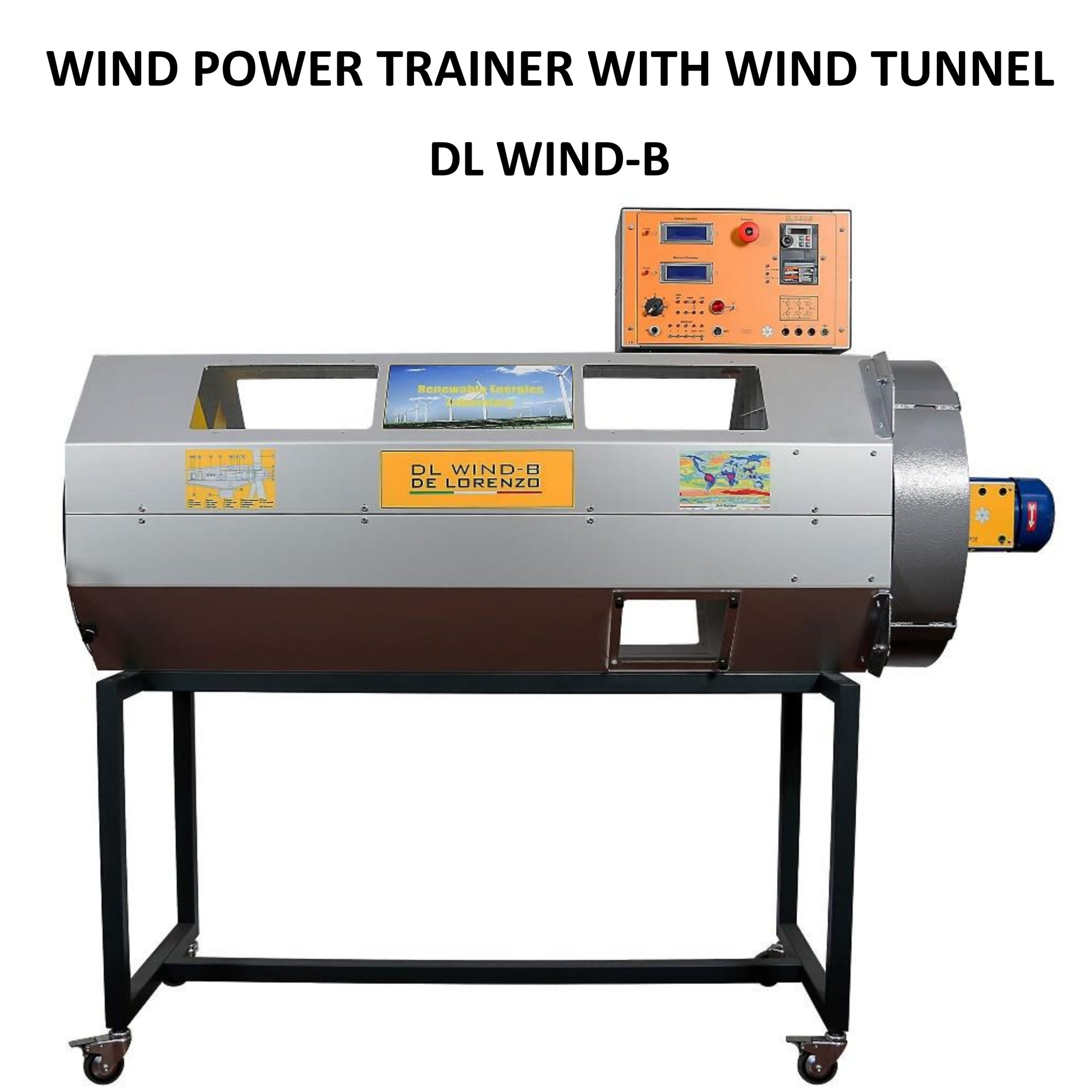
Wind Power Trainer with Wind Tunnel DL WIND-B
Features
- Complete wind energy training system with integrated wind tunnel
- Real-time study of wind turbine electricity generation
- Industrial three-phase fan for controlled airflow generation
- Horizontal axis wind turbine with adjustable orientation
- Six-blade 52V, 40W wind turbine system
- Wind speed measurement using precision anemometer
- Variable resistive load and lamp load for performance testing
- Real-time measurement of RPM, voltage, current, power, and wind speed
- Modbus RTU serial communication for data acquisition
- 0–10V analog outputs from each measuring instrument
- Emergency protection pushbutton for operational safety
- Software included for data acquisition and processing
- Supplied complete with connecting cables and experiment manual
- Removable turbine blades for efficiency analysis and student-designed blade testing
- Suitable for engineering laboratories and renewable energy research applications
Educational & Training Objectives
The DL WIND-B trainer is specifically developed to provide practical understanding of renewable energy systems and wind turbine operation. Students can perform detailed experiments and develop real-world technical knowledge in wind energy conversion systems.
Training objectives include:
- Understanding the operation of a wind tunnel simulator
- Measuring wind velocity using an anemometer
- Studying wind turbine startup and inertia overcoming process
- Characterizing horizontal axis wind turbine performance
- Investigating the effect of varying blade numbers
- Analyzing turbine orientation relative to wind direction
- Studying interaction between airflow and turbine mechanics
- Evaluating electrical output under varying wind conditions
- Understanding load behavior in renewable power systems
- Developing skills in data acquisition and energy analysis
Advanced Wind Tunnel System
The trainer incorporates a professionally designed wind tunnel that creates controlled airflow conditions for accurate and repeatable experiments. This integrated tunnel enables users to simulate various wind speeds and investigate the direct influence of airflow on turbine performance.
The wind tunnel includes:
- Industrial three-phase airflow fan
- Flow straightener for uniform airflow distribution
- Integrated wind speed measurement system
- Adjustable turbine mounting mechanism
- External anemometer stand for additional measurements
This realistic airflow simulation environment enables comprehensive laboratory experiments that closely resemble real wind energy systems.
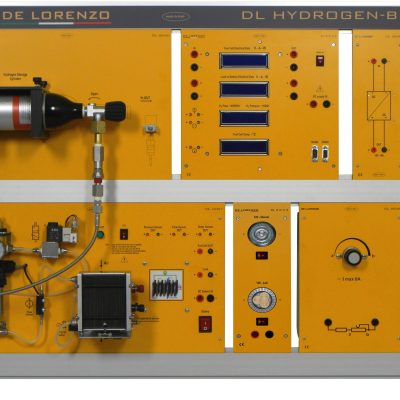
Intelligent Measurement & Control Module
The DL WIND-B features a sophisticated control and monitoring unit equipped with multiple instruments for accurate performance analysis. The integrated control module allows students to observe the electrical and mechanical characteristics of the wind turbine in real time.
Included instrumentation:
- Wind speed meter
- RPM meter
- Voltage meter
- Current meter
- Power meter
The trainer also includes:
- Three-phase inverter for airflow control
- Variable resistive load
- Lamp load testing system
- Emergency safety pushbutton
- Modbus RTU communication interface
- 0–10V analog output signals for external analysis and data logging
Practical Renewable Energy Experiments
The trainer supports a wide range of laboratory experiments related to renewable energy engineering and wind power technology. Users can investigate:
- Wind turbine startup characteristics
- Relationship between wind speed and turbine rotation
- Turbine efficiency analysis
- Electrical power generation characteristics
- Effect of blade angle and orientation
- Load variation performance testing
- Energy conversion efficiency
- Mechanical and electrical parameter measurements
- Data acquisition and signal processing
The removable blade design also allows students to create custom turbine blades using 3D printing technology, enabling advanced aerodynamic experimentation and innovative research projects.
Optional Vertical Axis Turbine Studies
The DL WIND-B system also supports optional study modules for vertical axis wind turbines, allowing comparison between different turbine technologies.
Savonius Turbine
The Savonius turbine demonstrates resistance-based wind energy conversion principles. Students can study drag-force turbine operation, airflow interaction, and vertical-axis turbine mechanics.
Giromill Turbine
The Giromill turbine introduces lift-based turbine technology where pressure differences create rotational motion. This module helps learners understand aerodynamic lift principles and startup resistance in vertical-axis systems.
Technical Specifications
- Wind Turbine Output: 52V, 40W
- Turbine Type: Six-blade horizontal axis wind turbine
- Fan Type: Three-phase industrial fan
- Communication: Modbus RTU
- Analog Outputs: 0–10V
- Tunnel Dimensions: 1900 × 600 × 1400 mm
- Net Weight: 110 kg
- Average Training Time: 4 hours
Wind Power Trainer with Wind Tunnel (DL WIND-B)
The Wind Power Trainer with Wind Tunnel (DL WIND-B) is an advanced renewable energy training system designed for the theoretical and practical study of wind turbine technology and electricity generation from wind kinetic energy. This professional laboratory trainer provides students, researchers, and engineering institutions with a complete hands-on platform to explore wind energy conversion, turbine performance, airflow dynamics, and electrical power generation in a controlled laboratory environment.
Built with an integrated wind tunnel system, the trainer allows users to simulate real wind conditions and analyze the operational behavior of a wind turbine under both no-load and load conditions. The system is specially developed for educational laboratories, technical universities, engineering institutes, and renewable energy research centers seeking practical experimentation in sustainable energy technologies.
The trainer combines industrial-grade components with advanced monitoring and control systems, making it an ideal solution for understanding the complete process of wind power generation. Through practical experimentation, learners can observe how variations in wind speed, turbine orientation, and blade configuration influence turbine efficiency and electrical output.