Corrosion Study Unit CRE-3302
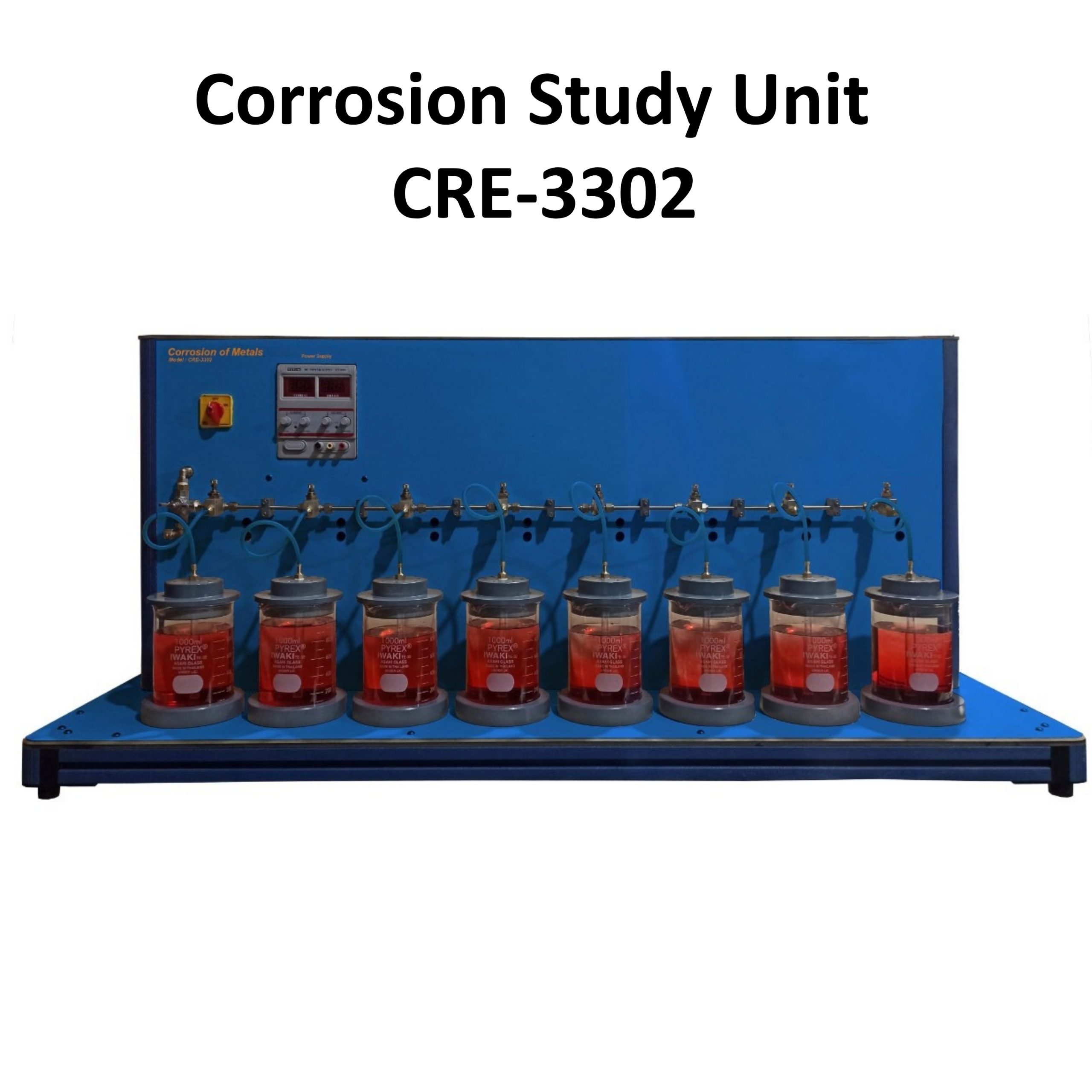
Educational & Research Applications
The CRE-3302 unit is ideal for:
- Chemical Reaction Engineering laboratories
- Corrosion Engineering studies
- Material Science laboratories
- Mechanical Engineering departments
- Metallurgy and Industrial Engineering programs
- Research institutes and technical training centers
- Industrial corrosion analysis training
It helps students and researchers understand:
- Electrochemical corrosion mechanisms
- Material degradation processes
- Corrosion prevention methods
- Protective coating performance
- Effects of environmental conditions on metals
- Cathodic protection techniques
- Galvanic corrosion behavior
Features
- Advanced corrosion study and corrosion protection training system
- Designed for chemical engineering and material science laboratories
- Enables simultaneous testing of multiple corrosion conditions
- Equipped with 8 transparent electrolyte vessels for visual observation
- Each vessel includes 6 specimen holders for metal sample testing
- Supports investigation of different metallic materials in various environments
- Adjustable external power supply for electrochemical experiments
- Integrated air supply system with pump
- Individual gas flow control for each vessel
- Reversing valve for air or external gas supply
- Supports sacrificial anode and local element experiments
- Manual pH measurement system for electrolyte analysis
- Suitable for educational, industrial, and research applications
Experimental Capabilities
The system supports a wide range of laboratory experiments including:
Corrosion Behavior of Metallic Materials
Students can study rust formation, passivation, and corrosion characteristics of different metals under controlled conditions.
Formation of Local Elements
The unit demonstrates galvanic cell formation and electrochemical interactions between dissimilar metals.
Influence of pH Value
Researchers can investigate how acidic or alkaline electrolyte solutions affect corrosion rates.
Influence of Salt Concentration
The system allows comparison of corrosion behavior at different electrolyte concentrations.
Oxygen Corrosion Studies
Controlled gas injection enables detailed investigation of oxygen-related corrosion processes.
Corrosion Protection Techniques
The unit demonstrates several corrosion prevention methods including:
- External voltage application
- Sacrificial anodes
- Protective surface layers and coatings
Technical Specifications
- Model: CRE-3302
- Type: Corrosion Study Unit
- Application: Chemical Reaction Engineering & Corrosion Studies
- Number of electrolyte vessels: 8
- Vessel type: Glass vessels with covers
- Specimen holders: 6 per vessel
- External voltage supply: Adjustable power pack
- Gas supply system: Integrated air pump
- Gas control: Individual flow control valves
- Gas selection: Reversing valve for air or external gas
- pH measurement: Manual pH recording unit
- External gas pressure range: 0.2 – 1 bar
Advantages of the System
- Provides hands-on corrosion engineering experience
- Enables visual observation of corrosion phenomena
- Supports multiple simultaneous experiments
- Flexible configuration for various research requirements
- Enhances practical understanding of electrochemical principles
- Compact and laboratory-friendly design
- Ideal for technical and vocational education
Corrosion Study Unit – CRE-3302
The Corrosion Study Unit CRE-3302 is a comprehensive laboratory training system designed for studying corrosion mechanisms, corrosion protection methods, and the behavior of metallic materials under different environmental conditions. This advanced experimental unit is specially developed for chemical reaction engineering, corrosion engineering, material science, and technical education laboratories.
Corrosion is one of the major challenges in industrial applications because it causes severe economic losses, equipment damage, safety risks, and reduced operational efficiency. The CRE-3302 unit provides students, researchers, and laboratory professionals with practical knowledge about corrosion processes and protection techniques through real-time experiments and comparative analysis.
The system enables simultaneous investigation of multiple variables affecting corrosion by using eight separate glass electrolyte vessels. Each vessel can be filled with different electrolyte solutions, allowing comparative studies of various metals and environmental conditions. The equipment offers a highly flexible and controlled experimental platform for understanding electrochemical corrosion phenomena.
Working Principle
The Corrosion Study Unit works by immersing metallic specimens into electrolyte solutions contained inside the glass vessels. Different environmental and electrochemical conditions can then be applied to study how metals react and corrode over time.
Each vessel allows the placement of up to six metallic samples. The specimens may be electrically connected to investigate galvanic corrosion, sacrificial anodes, and local electrochemical cells. An adjustable external voltage source can also be applied to reverse or influence electron flow between noble and base metals.
The system includes an air pump and gas distribution arrangement that allows ambient air or external gases to be introduced into the electrolyte solutions. Gas flow rates can be individually adjusted using dedicated flow control valves, enabling accurate oxygen corrosion studies and gas influence investigations.
Using the integrated pH monitoring method, users can observe how electrolyte acidity or alkalinity affects corrosion behavior. This makes the unit highly effective for practical electrochemical and corrosion engineering education.