Digital Techniques in Aviation – BL2976
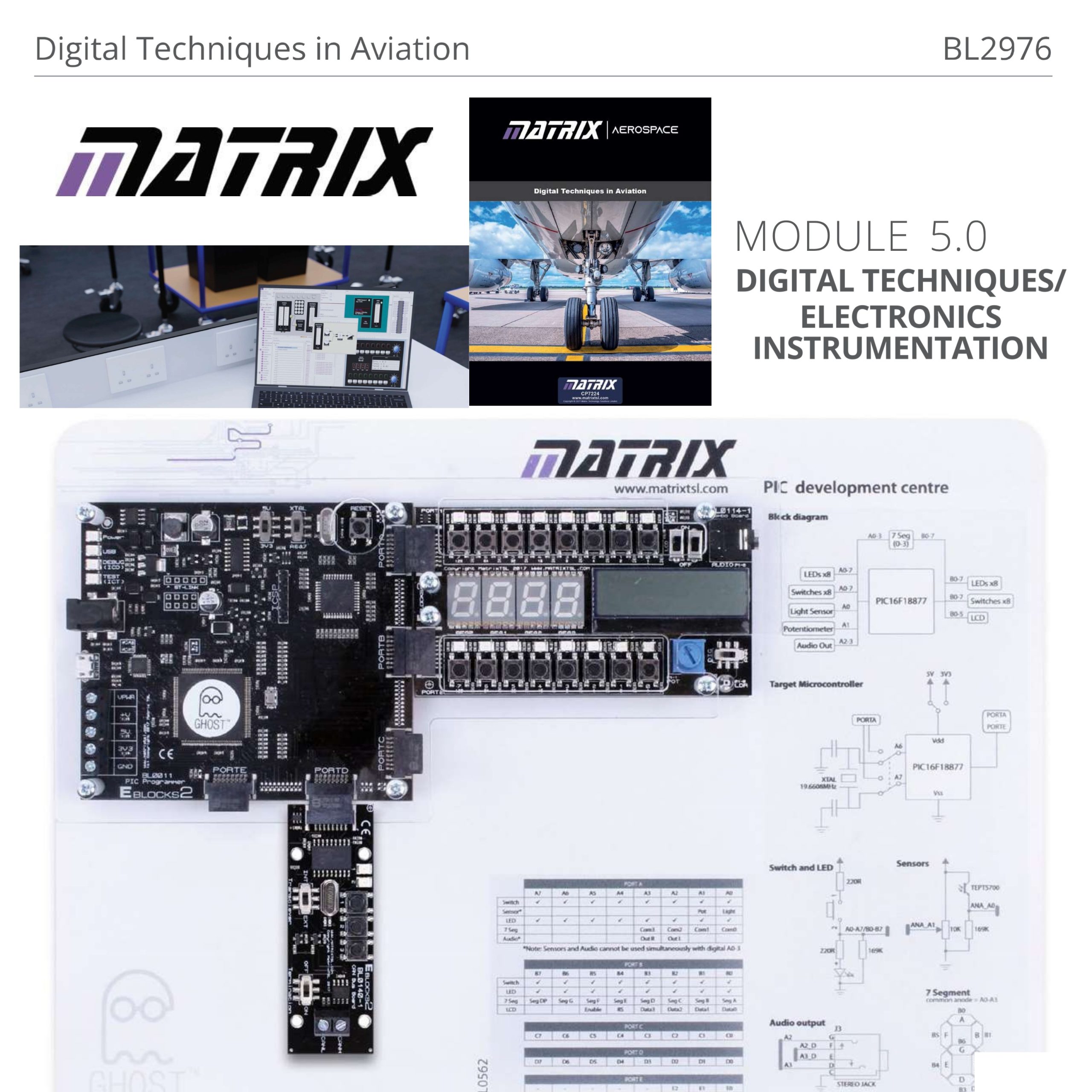
Digital Techniques in Aviation (BL2976) training package is developed for students studying EASA Part-66 Module 5: Digital Techniques. This system provides a practical and structured approach to understanding digital electronics and microcontroller-based systems commonly used in modern aviation technology.
The trainer is built using a microcontroller-based training platform integrated with the E-blocks system. It includes essential hardware such as a PICmicro programmer board, general purpose input/output board, motor training board, and CAN bus communication interface. These components allow students to explore the operation of digital control systems through hands-on experiments.
Students begin by using Flowcode software to design and develop simple programs. These programs are then compiled and transferred to the microcontroller hardware, allowing learners to observe how software interacts with electronic hardware. As the training progresses, students analyze more advanced programs to understand the development of complex digital systems.
The system also enables communication with an Electronic Flight Information System (EFIS) trainer through a CAN bus interface, demonstrating how multiple electronic systems communicate within modern aircraft. This process helps students gain practical knowledge of how microcontrollers and microprocessors are used in aviation systems.
An 80-page student guide is included with the trainer, providing step-by-step instructions for experiments and exercises. The complete training module typically requires approximately 10 hours to complete.